Home / The pass
How the kitchen works
One chef. One cuisine. Never the other way round.
The whole house is built on a single rule, and this page is the rule.
At RASA every cuisine is a "seat": a specialist chef who cooks only that cuisine, with their own masala base, their own vessels and their own line at the event. A wedding menu draws on as many seats as it needs — a Karnataka lunch, a Punjabi reception, a chaat counter, a halwai — and each is cooked by its own chef. No seat cooks another's food. That is the difference between multi-cuisine catering and multi-cuisine catering that tastes like one kitchen, and it is how the house has been organised since 1995.
The problem the rule solves
Volume catering rewards one shortcut above all others: the base gravy. One pot at dawn, divided into the makhani, the tikka masala, the "Chettinad" and the "Kerala". Then the second shortcut: one chef, because the burner is there. Food writers have called the result "synonymous with uninspired and unauthentic food" and are "skeptical of one chef's ability to expertly cook multiple cuisines". Every food lover in Bangalore has said it at a wedding.
What a seat is
A seat is a chef, a pantry and a line. The Chettinad seat has its own roasted masalas, ground the morning of the event. The Jain seat has its own vessels and a dry store no root vegetable enters. The Kerala seat grates its coconut on the day. The wok seat does not own a chafing dish. The tiffin seat starts at three. Each seat cooks at the event, at its own counter or on its own line, with its own servers where the food demands it.
What happens at the pass
The pass is where the seats meet the floor. On a wedding day the plan is drawn backwards from the muhurtham: the leaf lunch in waves timed to the mantapa, the reception counters opening when the couple arrive, the dessert table lighting last. The seats cook to that plan and the pass holds them to it. The last wave is cooked last.
What it costs us
People. A 25-seat kitchen carries more chefs than a one-kitchen caterer of the same size, and they are specialists. Per plate the bands are the same as the city's; the difference is where the money goes.
Fusion, the proof
The clearest demonstration of the rule is a fusion dish built by two seats — the Chettinad chef's pepper-chicken filling inside the Italian chef's ravioli. If the filling tastes of Karaikudi and the pasta of Bologna, two chefs made it. The chef's table →
Food critics and writers grumble about multi-cuisine restaurants, declaring them "synonymous with uninspired and unauthentic food," skeptical of one chef's ability to expertly cook multiple cuisines from different countries.
— Meher Mirza, The Juggernaut, June 2021
The seats
25 tickets on the rail
The Karnataka seat is the oldest in the kitchen.
Own chefSEAT 02The Tamil seat grinds its own sambar podi and will not use the Karnataka chef's.
Own chefSEAT 03The Andhra chef stocks three chillies and uses them for different jobs.
Own chefSEAT 04The Chettinad chef roasts and grinds every morning of an event.
Own chefSEAT 05The Kerala chef counts a sadya in "koottans" and will tell you a 26-item sadya is normal and a 13-item one is a lunch.
Own chefSEAT 06The coastal chef holds four communities in one seat and cooks them as four menus.
Own chefSEAT 07The Coorg chef keeps kachampuli from a single estate and will not substitute tamarind.
Own chefSEAT 08The Hyderabadi chef seals every handi with dough and times the dum by the smell of the rice, not by a clock.
Own chefSEAT 09The North Indian chef has the busiest seat in the house and refuses to let it cook Chinese or Continental "since the tandoor is there anyway".
Own chefSEAT 10The Awadhi chef will not cook Hyderabadi biryani and the Hyderabadi chef will not cook Awadhi.
Own chefSEAT 11The Jain seat keeps its own vessels and its own store.
Own chefSEAT 12The Gujarati chef makes khandvi by hand and rolls it thin enough to see the light through.
Own chefSEAT 13The Bengali chef keeps two mustard oils and a bag of panch phoron that no other seat may borrow.
Own chefSEAT 14The wok chef cooks on a high-pressure burner in front of the guest and tosses one portion at a time.
Own chefSEAT 15The Asian chef makes the curry pastes and rolls the sushi at the counter.
Own chefSEAT 16The Italian chef makes the dough in the morning and will not serve a risotto that has waited more than eight minutes.
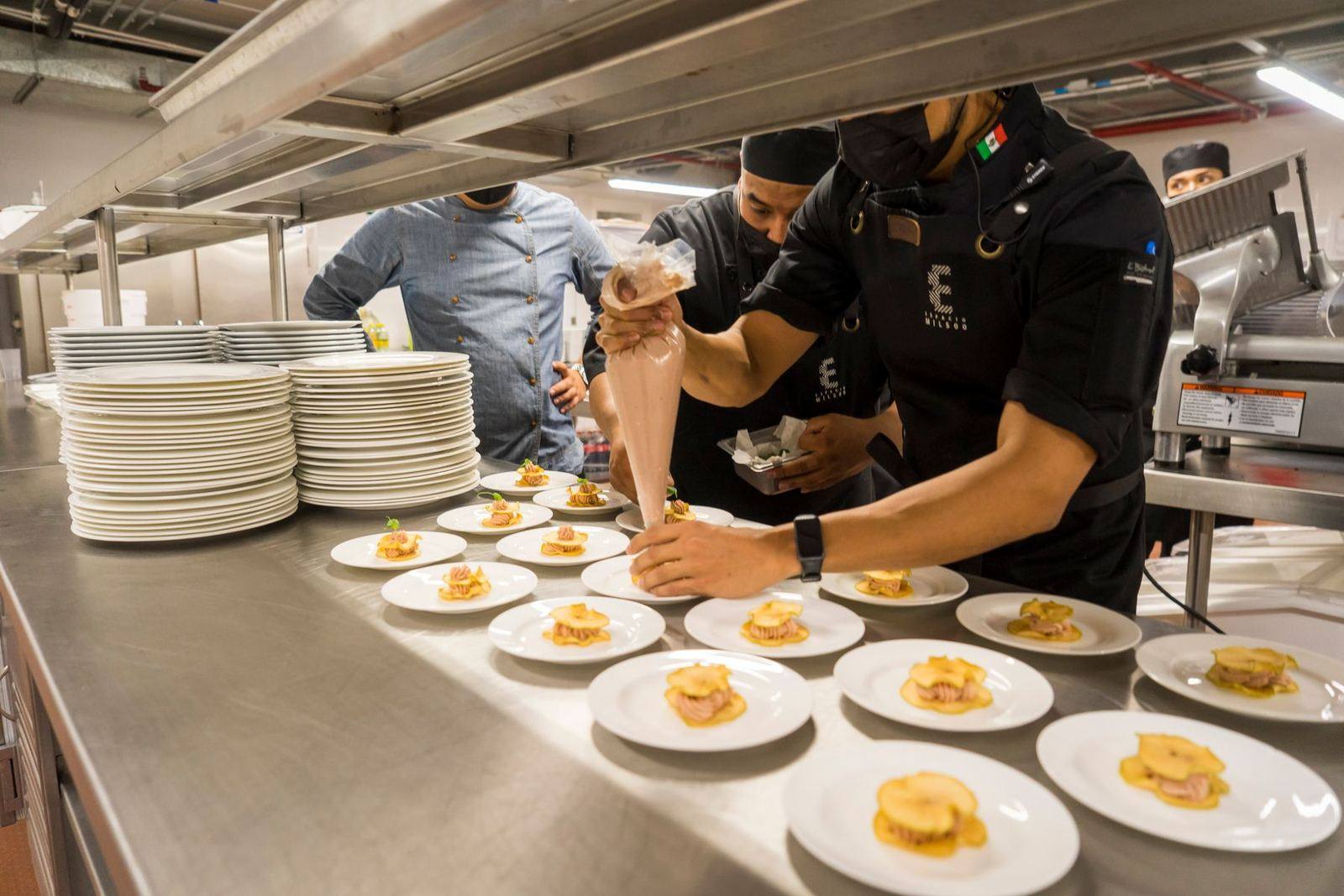
Own chefSEAT 17The Continental chef runs the plated service — the timing of 300 identical plates leaving a pass in twelve minutes is this seat's craft, and it is a different craft from a buffet..
Own chefSEAT 18The Mediterranean chef makes the hummus without a jar in sight and runs the shawarma spit at the counter.
Own chefSEAT 19The Mexican chef presses tortillas at the counter and makes the salsas the morning of the event.
Own chefSEAT 20There is no fusion chef.
Own chefSEAT 21The chaat chef makes the chutneys in the morning, fries the puris on site and keeps the pani cold on ice.
Own chefSEAT 22Every counter is run by the chef of that cuisine's seat.
Own chefSEAT 23The tiffin chef starts at three in the morning for a muhurtham breakfast and grinds the idli batter the day before.
Own chefSEAT 24The desserts seat is two chefs — a halwai and a pastry chef — because a Mysore pak and a crème brûlée are not made by the same training..
Own chefSEAT 25The beverages chef makes filter coffee the way the city expects it — decoction, chicory in the Bangalore proportion, milk boiled — and treats an espresso bar as a separate discipline with its own barista..
Own chefQuestions people ask
What does "one chef, one cuisine" mean at RASA?
Each of the 25 cuisines on the menu is cooked by a dedicated specialist chef who cooks only that cuisine — with their own masala base, vessels and line at the event. No chef cooks another seat's food.
Why does multi-cuisine catering usually taste the same?
Because one kitchen cooks everything from a shared base gravy and one chef does the tandoor, the wok and the pasta. The fix is structural, not a better recipe.
Does this cost more?
Per plate, no — the bands are the same as any Bangalore caterer's at each tier. It costs the kitchen more in people, which is the point.
Can I meet the chef who will cook my cuisine?
At the tasting, yes. The tasting is cooked by the chefs who will cook the day.
Get a menu and a per-plate quote, usually the same day
Date, head count, the cuisines you have in mind. Enough for the first reply to carry a menu and a number rather than a brochure.
What happens after you send the ticket
- A written reply, usually the same day. A first menu built for your occasion, the per-plate figure it comes to, and the two or three questions we need settled before the number is firm.
- A tasting. For weddings and events of size we cook the shortlist for you before you sign. Each cuisine on the menu is cooked by the chef who will cook it on the day.
- The plan for the day. Counters, service staff, timings against your muhurtham or your agenda, and the venue's rules on outside catering, checked with the venue by us.